
Questions to ask before booking a venue in Atlanta


Plated dinners create formality, buffets encourage mingling, and food stations add variety. Compare service styles for your next Atlanta event.
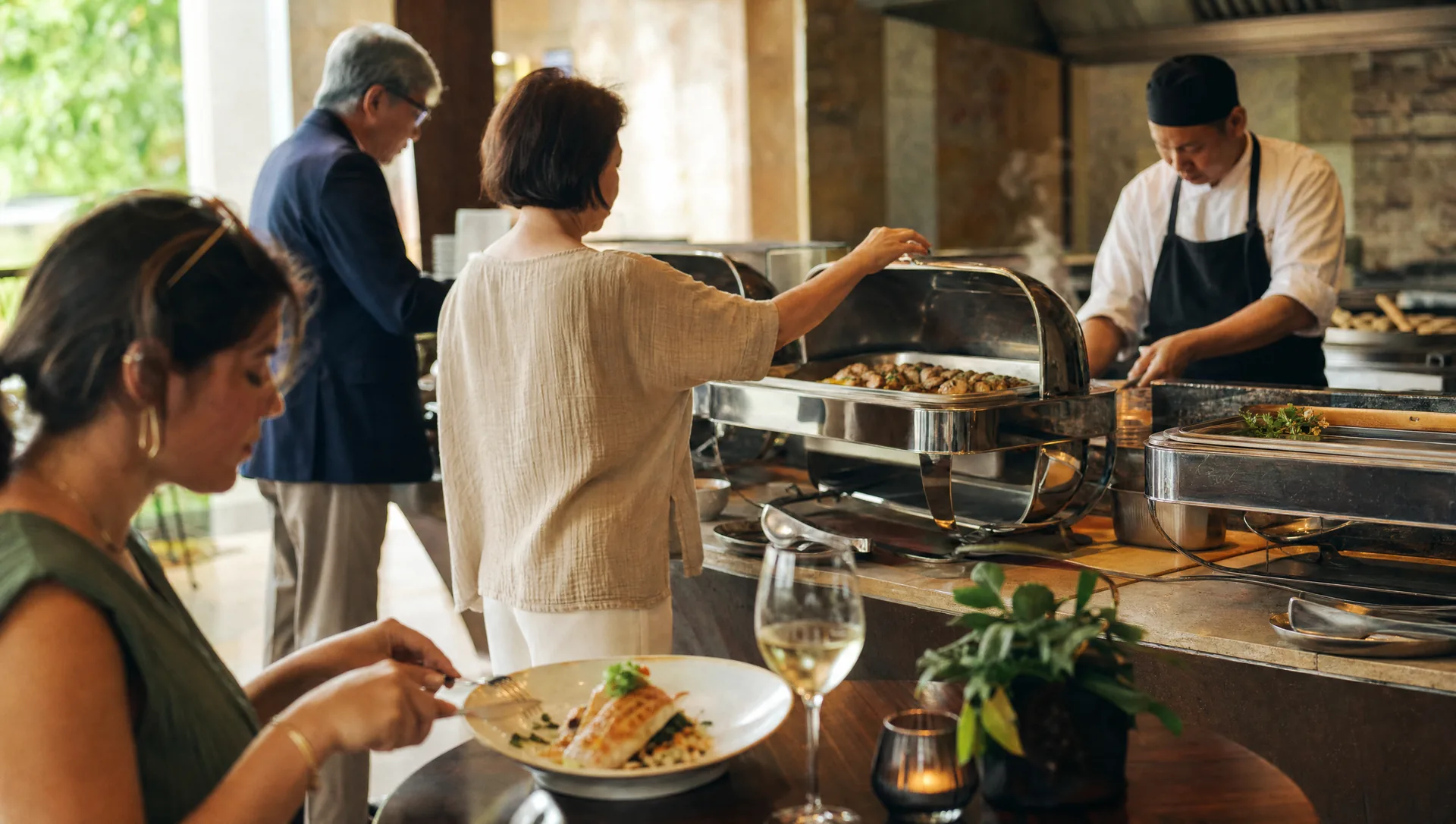
The way food is served at an event shapes the entire atmosphere. Plated dinners slow the room down and create a formal, structured experience. Buffets give guests the freedom to move, mingle, and choose what they want. Food stations split the difference, adding visual variety and an interactive element.
Each format works brilliantly in the right context and falls flat in the wrong one. The decision comes down to your guest count, venue layout, budget, and the kind of energy you want in the room.

A plated dinner is the most controlled service format. Every guest receives the same beautifully composed plate, delivered simultaneously to each table. The timing is synchronized. The presentation is consistent. The experience feels curated.
This format works best for:
The tradeoff is cost and staffing. Plated service requires more servers per table, a kitchen team that can fire courses in sequence, and a lead captain to orchestrate the timing. That labor adds up, which is one reason plated dinners tend to carry a higher per-person price than other formats.
There's also less flexibility for guests. Dietary accommodations need to be handled in advance, and guests can't simply skip a dish they're not interested in. If you have a group with varied preferences, collecting meal selections on RSVP cards helps your caterer plan accurately. For guidance on managing those details, our dietary restrictions guide covers the logistics.
If you're choosing between plated and buffet for a wedding specifically, the format decision ties directly into your overall wedding menu planning process.
Buffets let guests serve themselves. The format naturally encourages movement and conversation, which makes it a strong choice for events where networking or socializing is part of the point.
Strengths of buffet service:
The potential downsides are flow and perception. A poorly managed buffet creates long lines, crowded stations, and food that sits too long. A well-managed one, with dual-sided stations, attentive replenishment, and thoughtful spacing, avoids all of that.
Buffets work well at venues in Midtown and Alpharetta that have open floor plans with room for guests to circulate. Tight spaces with limited table clearance make buffet logistics harder.
"Their food is amazing! I mean absolutely top notch! This is the foodies caterer. The flavors were layered, the food was hot and fresh and the presentation was elevated." - Cue The Champagne Event Planning and Design
Food stations take the buffet concept and break it into separate, focused areas. A carving station in one corner. A pasta station along the wall. A sushi bar near the entrance. A dessert display by the dance floor.
This format excels at:
Stations require more space than a single buffet line and sometimes additional staffing for attended stations. But they create natural gathering points throughout the room, which keeps the energy distributed and the atmosphere lively.

Before you sign with any caterer, run through our list of questions to ask a caterer to make sure the details are covered.
Atlanta's catering professionals can execute all three formats at a high level. The right choice depends on your event, not on a trend.
Yes. A common approach is a plated first course (salad or appetizer) followed by buffet or station service for the main meal. This gives guests the best of both formats and helps control pacing during the early part of the event.
Buffets and food stations both handle large headcounts well, provided the venue has enough floor space. Plated service for 200 is doable but requires significantly more staff and tighter kitchen coordination.
Usually, yes. Stations require more setup, more serving equipment, and sometimes dedicated staff at each station. The cost difference depends on how many stations you run and whether any are chef-attended.
If you're still weighing the options, a conversation with the right caterer can clarify things quickly. Reach out and let's talk through what works for your event.
I wanted to express our appreciation for a job well done! Yesterday was nothing short of amazing. The care shown by you, Chef and your servers was phenomenal. My siblings and I were pleased beyond measure. The food was absolutely delicious. The salmon and the chicken were cooked to perfection. The potatoes were a smash... no pun intended. The green beans were tasty. The salad was really good and the charcuterie board was a nice touch. Chef's addition of various textures was masterful. The food was outstanding to say the very least. As if the flavorful food wasn't enough, the presentation took the event over the top! The buffet table looked fabulous. It was really eye pleasing. A fantastic job all around!!! Thank you for creating a culinary masterpiece. Just as your company name suggests, we truly loved and experienced your "Exquisite Delites."
I've worked with Chef Eric several times over the years for both professional and personal events, and each time, he created the perfect menu for the occasion. His team was on hand from start to finish, ensuring everything ran smoothly. Their attention to detail and professionalism are unmatched! Five stars isn't enough — I'll definitely be using them for all my catering needs moving forward. Thanks, Chef!
Chef Eric and Sandra Centeno's incredibly well-seasoned and delicious food, gorgeous presentations, detailed preparation, and collaborative teamwork make them the ideal catering partner. You just set the vision and wait for the magic!

