
Questions to ask before booking a venue in Atlanta


A complete guide to TV and film catering in Atlanta. Covers craft services, production meals, caterer evaluation, and crew feeding logistics.
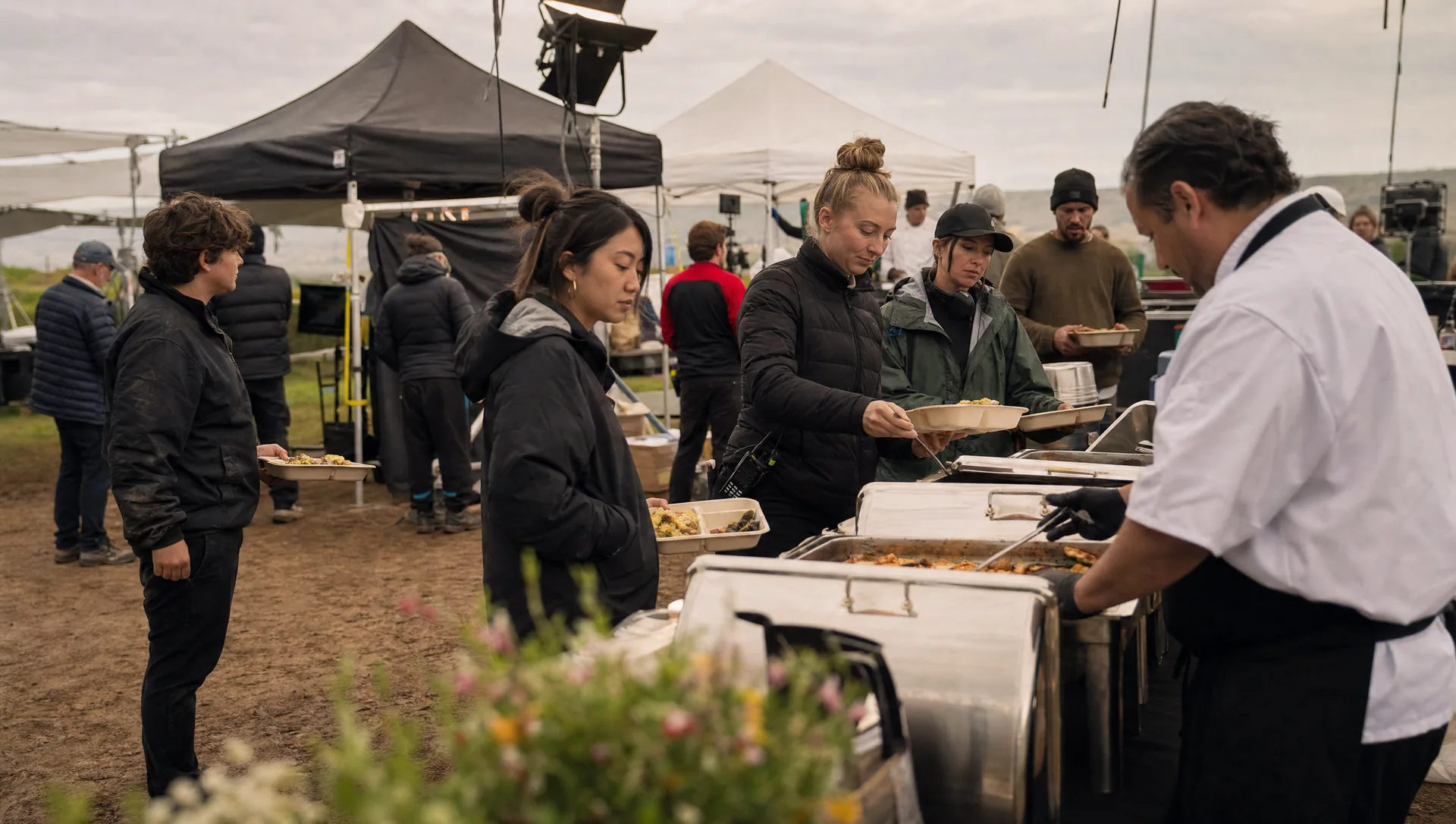
Atlanta is one of the busiest film production hubs in the country. Soundstages across Trilith, EUE/Screen Gems, and Third Rail Studios run year-round, and every one of those productions needs a catering operation that can keep pace. If you're a producer, line producer, or production coordinator looking for TV and film catering in Atlanta, this guide breaks down exactly what that entails: the difference between craft services and production meals, how to evaluate a caterer, and how to keep your crew fed and focused through grueling shoot schedules.

Georgia's film tax credit program has turned metro Atlanta into a production powerhouse. Feature films, episodic television, commercials, and music videos shoot here constantly. That volume creates demand for caterers who understand the specific rhythm of a working set.
Production catering is a different discipline. The hours are unpredictable. The headcounts shift. Dietary needs are varied and non-negotiable. A crew that doesn't eat well doesn't perform well, and when a 14-hour shoot day hits hour 10, the quality of the food on set directly affects morale and output.
General caterers aren't built for this pace. Production caterers are.
Craft services is the continuous food and beverage station available to the crew throughout the shoot day. It's not the main meal. It's everything between meals: snacks, drinks, coffee, fruit, sometimes hot items like soup or breakfast burritos during early morning calls.
A well-run craft services table keeps energy levels stable. A poorly stocked one becomes a morale problem by mid-afternoon. For a deeper breakdown of exactly what goes on a craft table and how producers should evaluate it, read what craft services actually includes on a film set.
The basics of a solid craft services setup:
This is where confusion happens. Craft services runs all day. Production meals (often called "catered meals" or just "lunch," regardless of the actual time) are the full sit-down meals provided at specific intervals during the shoot.
Union contracts typically require a meal break within six hours of call time. Miss that window, and the production faces meal penalty fees that add up fast. The caterer's job is to have a full hot meal ready at the scheduled time, every time, no exceptions.
A typical production meal service includes:
The quality of the production meal matters more than most producers realize on their first project. Crew members talk about the food. Good food builds goodwill. Mediocre food becomes a running complaint that drags down the energy on set.
Not every caterer who can handle a wedding reception can handle a film set. The logistics are fundamentally different. Here's what separates a production-ready caterer from a general one.

"I recently had the pleasure of working with Exquisite Delites while helping my company plan a large event, and they exceeded every expectation. We had some complex requests and ideas, and Sandra + Eric were incredibly hands-on and professional, taking the time to go over every detail with us in planning calls. They were prepared for every possibility and even made very last-minute adjustments to accommodate dietary restrictions/allergies seamlessly." - Kristina G.
No two shoot days look the same. A Monday might be a light interior scene with 40 crew. Thursday could be a location shoot in Decatur with 150 people and a 5:00 AM call time.
The catering plan has to flex with the schedule. That means:
Production caterers in the Atlanta market often work across multiple soundstage complexes and on-location shoots throughout Buckhead, Midtown, and the surrounding metro area. Familiarity with these locations matters. A caterer who knows the loading dock layout at a Midtown studio saves the production time and headaches. For a detailed look at large-crew logistics, read how to feed 100+ crew members on a 14-hour shoot day.
The food on set isn't just a line item. It's a productivity tool.
Blood sugar crashes hit hardest around hour 8 or 9. That's when mistakes happen, tempers shorten, and the pace of the shoot slows. Strategic food placement and timing prevent this.
Experienced production caterers build their craft services rotation around energy management: complex carbs and protein in the morning, lighter options in the early afternoon, and a second wave of substantial snacks before the late push. The goal is steady fuel, not sugar spikes followed by crashes.
The production meal itself should balance richness with digestibility. Heavy, greasy food puts people to sleep. Bland, underseasoned food feels like an afterthought. The sweet spot is flavorful, well-prepared food that leaves crew satisfied but not sluggish.
Craft services is the all-day snack and beverage station available to crew throughout the shoot. Catering refers to the full production meals served at scheduled breaks, typically every six hours per union rules.
Four to six weeks is standard for most productions. During peak season (spring and fall in Georgia), booking eight weeks out gives you the best selection of experienced providers.
Yes. Professional production caterers prepare separate meals for vegan, halal, kosher, gluten-free, and allergy-specific needs as part of their standard service. These aren't afterthoughts. They're planned into every menu.
One main meal is standard for a 12-hour day. Shoot days that run past 12 hours trigger a second meal requirement under most union contracts. Craft services fills the gaps between meals.
Experienced production caterers bring self-contained setups including mobile kitchens, generators, water tanks, and waste disposal. They can operate at soundstages, warehouses, parks, and remote locations across the Atlanta metro area.
If you're in pre-production on a shoot in the Atlanta area, the catering conversation should happen early. The right production catering partner removes one major variable from your shoot days and keeps your crew performing at their best.
Reach out to start the conversation.

Related Reading
Craft Services Catering in Atlanta
Their food is amazing! I mean absolutely top notch! This is the foodies caterer. The flavors were layered, the food was hot and fresh and the presentation was elevated. Don't question if it's the best option, Exquisite Delites should be your only option for a high touch catering experience.
The food was a delight and exquisite. They are very professional and diligent in what they do. I can really tell the passion in their food. Five out of five highly recommend.
I recently had the pleasure of working with Exquisite Delites while helping my company plan a large event, and they exceeded every expectation. My company has used their catering many times, and they always deliver high-quality, delicious food that my coworkers rave about. This time, we had some complex requests and ideas, and Sandra + Eric were incredibly hands-on and professional, taking the time to go over every detail with us in planning calls. They were prepared for every possibility and even made very last-minute adjustments to our menu accommodate dietary restrictions/allergies seamlessly. Their dedication to excellence and thoughtful service made our event a huge success. Highly recommended them to anyone looking for a top-notch team with an eye for detail and unmatched customer service!

